Reviewed · PRIVATE
Introductory Semi-Private Kitesurf Lesson
The best part of this Cayman activity is that you learn the kite before the board gets involved. For two hours, an instructor guides you through flying and controlling the kite, then moves you into the water for those first thrilling starts. Shallow, clear water and steady local conditions can make a big difference when you are still sorting out your hands and feet.
I like the two-person format, since you get far more coaching than in a large class while splitting the $400 group price. I also like that equipment and selected-hotel pickup are included, which removes two common hurdles for a first attempt. The main consideration is wind: this is an outdoor sport, and poor weather can cancel the session or force a change of date.
Key points to know before you book
- Two-hour semi-private format: Share one kite and board with one other person, while keeping the class limited to your group.
- Instruction comes before riding: You first learn kite handling and control, then work toward water starts and short board runs.
- $400 per group of up to two: The price works out to $200 each when two people book together.
- Selected-hotel pickup is included: Drop-off is also provided, though pickup is not listed for every hotel.
- Shallow water helps beginners: The teaching area has been described as knee-deep in places, with radios used during instruction.
- Weather matters: You can receive a full refund or choose another date if poor conditions cancel the lesson.
Starting with the kite at Seven Mile Beach
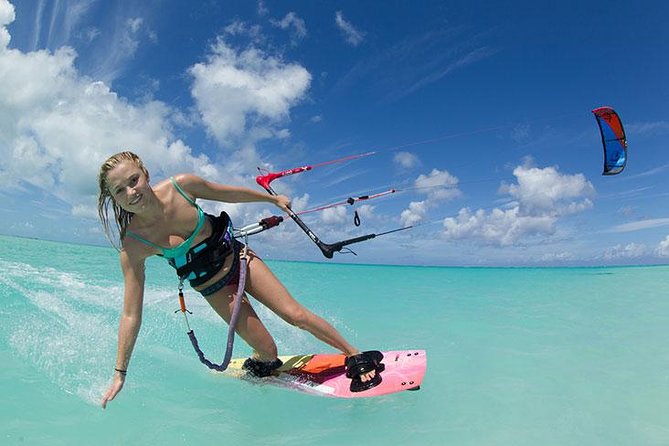
Kitesurfing can look like a stunt from shore: a large kite pulls a rider across the water while the board skips below. Your first lesson is less dramatic, and that is a good thing. The early work is about learning how the kite responds, how to steer it, and how to keep it from becoming the boss of the afternoon.
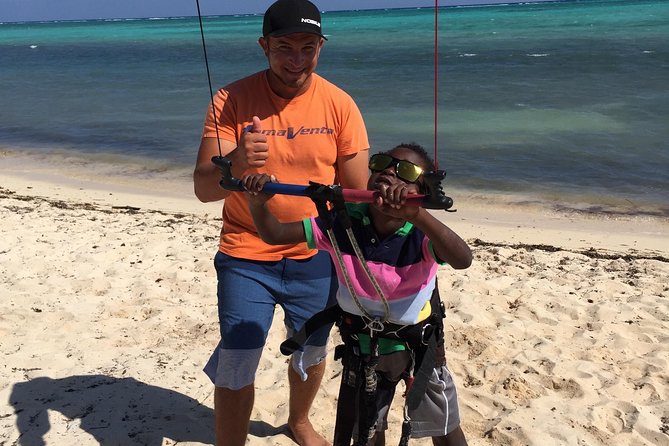
The session begins with kite skills on land or at the water’s edge, according to the activity description. You learn how to fly, handle, and control the kite before trying to stand on the board. This order matters. If you are watching your feet while also trying to understand the kite, progress gets messy fast.
The semi-private setup gives you room to ask questions and repeat movements. You share the kite and board with one other person, so there will be some waiting while your partner takes a turn. Still, that pause can be useful. You can watch the instructor correct someone else, then try the same adjustment yourself.
The instructor names associated with this operation include Pedro, Louis, Will, Jhon, and Miguel. The experience appears to use more than one instructor rather than promising one specific person for every booking. If you have a preference, ask when scheduling, but do not assume a named instructor is guaranteed.
A few more Cayman Islands half-days to compare
- Private Swim Lesson or Triathlon Training on Seven Mile Beach!
★ 5.0 · 6 reviews
Why the shallow Cayman water matters
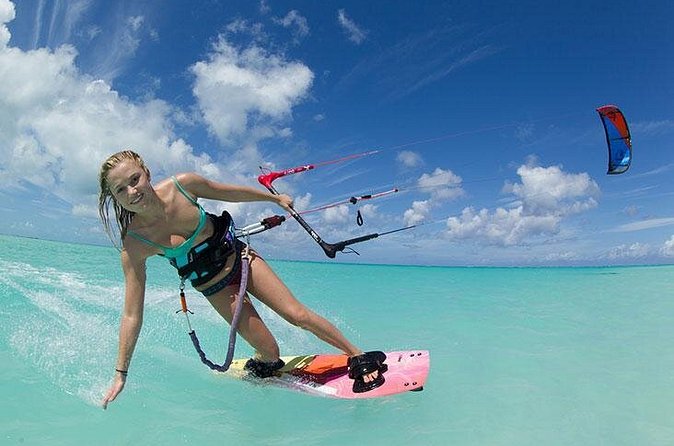
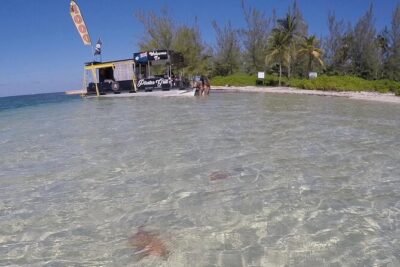
Beginner kiteboarding is easier when you can stand up. Several descriptions of the teaching area point to calm, clear, shallow water, with some sections around knee depth. That lets an instructor walk out with you and help you reset the kite or board without turning every mistake into a swim.
This is one of the most useful features for a first lesson. You are likely to fall. In shallow water, falling is part of the lesson rather than a crisis, and you can spend more time trying again. The water also lets you focus on technique instead of worrying about staying afloat.
The setting has been described as a protected national seashore area reached by the island’s only unpaved road. That detail gives the outing a more remote feel than a standard beach activity, though you should treat it as a practical note, not a promise of a scenic tour. The main attraction is the teaching water and the wind, not sightseeing.
Radios have also been used during instruction. That is helpful because kite control often takes place at a distance from the instructor. Clear communication lets you hear the next correction without relying on hand signals or shouting over wind.
Moving from kite control to the first water start
Once your kite handling is steady enough, the lesson shifts to the board. You will work on getting your feet into position, managing the kite’s pull, and rising from the water without losing control.
The first successful stand can come quickly for some people, while others need several sessions. The supplied experience is an introduction, not a guarantee that you will ride independently after two hours. One couple reported standing on the board by the end of the lesson, while other accounts describe progress over several lessons. That is a fair picture of the sport: a good first class can get you moving, but reliable riding usually takes practice.
I would judge the lesson by the quality of your foundation, not only by how many yards you travel. If you leave knowing how to steer the kite, launch it safely with help, and understand the next steps, the class has done its job.
The instructor’s teaching style matters here. Pedro has been praised for patience and careful explanations, while Louis helped a first-time couple reach the board stage. Jhon and Miguel have also worked with beginners, including older students and children. These examples suggest the school has experience adjusting its pace, but your own result will depend on wind, fitness, comfort in the water, and how quickly the controls make sense to you.
What the two-person price really buys
The cost is $400 per group of up to two people. If you book with a partner, that is $200 each for roughly two hours, with gear and selected-hotel transportation included. That is much easier to justify than paying the full private rate alone, especially if you are traveling with a spouse, friend, or older child who wants to try the same activity.
The tradeoff is shared equipment. You do not each get a separate kite and board for the full session. You will take turns, so your active riding time is less than two hours. On the other hand, a shared lesson lets you watch the instruction closely, and the lower price makes it a sensible first test of a sport that can become expensive once you add more lessons or rental days.
The value improves if the session is your first step toward more practice. Several participants continued with additional lessons, and some moved on to equipment rental after gaining basic control. If you already kite regularly, this introductory class may feel too slow. If you are starting from zero, the chance to test the sport without buying gear is the point.
The activity is described as a private booking with only your group participating. That does not mean each person has a separate instructor or separate equipment. It means strangers are not added to your booked group, while the two participants share the lesson.
Back on dry land, a different sort of afternoon:
- Stingray City Experience Plus Two Snorkeling Stops on Grand Cayman
★ 5.0 · 1,477 reviews - Starfish Point, Stingray City & Coral Garden (3-STOP Adventure)
★ 4.5 · 1,168 reviews - Night Bioluminescence Snorkel Tour
★ 5.0 · 987 reviews - Stingray City and Starfish Experience with Coral Reef Snorkeling
★ 4.5 · 924 reviews
Pickup, timing, and cruise-day planning
Hotel pickup and drop-off are included for selected hotels. This is a useful part of the package because carrying kite equipment or arranging a separate ride would add friction to a short activity. Check your hotel’s eligibility before booking, since the pickup benefit is not listed as universal.
Cruise passengers need to provide the ship name, docking time, disembarkation time, and re-boarding time when booking. That information lets the operator judge if the session fits your port day. Do not treat a two-hour lesson as a two-hour total outing. Pickup, driving, preparation, and returning to the ship all take time, and weather can affect the schedule.
The mobile ticket is convenient, but it does not replace confirming the meeting plan. If you are coming from a cruise, give the requested ship details right away. If you are staying at a hotel, verify the pickup point and timing before the day of the lesson.
Confirmation is normally received at booking. Reservations made within one day of the activity are confirmed as soon as possible, subject to availability. That makes last-minute booking less certain, especially during a short island stay.
Who will get the most from this lesson
This is a strong match for first-time kiteboarders, couples, friends, and families who want a shared activity. The supplied experiences include adults, teenagers, children, and a 61-year-old beginner, so the operation has worked with a broad age range. That does not promise that every person is suited to the sport, but it does show that beginners are the intended audience.
You should be comfortable taking instruction near and in the water. The activity says most people can participate, but it does not provide a detailed list of physical or medical requirements. If you have concerns about swimming, balance, strength, or an injury, contact Kitesurf Cayman before booking.
This is also a good choice if you like learning a real skill rather than simply being pulled behind a boat. The payoff is not passive. You control the kite, make mistakes, and gradually connect the kite’s pull with the board beneath you.
I would choose a private lesson instead if you already have experience, want maximum board time, or are trying to progress quickly. One account specifically described the semi-private format as ideal for a first lesson, with a private lesson better for faster improvement afterward.
What can affect your experience
Wind is the central variable. The Cayman Islands may offer favorable kitesurfing conditions, but no operator can order perfect wind for a particular morning. The activity requires good weather, and a poor-weather cancellation brings the choice of another date or a full refund.
That policy makes booking less risky, but weather can still disrupt a tightly planned cruise day or a short vacation. Leave some flexibility if this is a major part of your itinerary. The lesson is best treated as a weather-dependent activity rather than a fixed appointment that must happen at any cost.
Your partner’s pace can also affect the session. A two-person lesson is affordable because you share the kite and board. If one student is much more experienced, much younger, or much less comfortable in the water, the instructor may need to divide attention carefully. That is not a flaw in the format, but it is worth discussing when two people have very different goals.
Finally, do not measure success too narrowly. Getting upright on the board is exciting, but learning how to control the kite safely is the more important first step. You may leave standing briefly, or you may leave ready for another lesson. Both outcomes can be worthwhile.
Booking and cancellation details
You can cancel at least 24 hours before the local start time for a full refund. Cancellations made within 24 hours are not refunded, and changes during that window are not accepted.
Because the activity depends on weather, a cancellation made by the operator for poor conditions gives you the choice of another date or a full refund. That is different from canceling because your schedule changed, so keep the 24-hour cutoff in mind.
The activity is confirmed at booking in normal circumstances. For bookings made within one day, confirmation arrives as soon as possible and depends on availability. A mobile ticket is provided.
FAQ
How long is the semi-private kitesurf lesson?
The lesson lasts approximately two hours.
How many people can join?
The price covers one group of up to two people. The two participants share the kite and board during the lesson.
What does the $400 price include?
The $400 group price includes the kitesurfing equipment and hotel pickup and drop-off from selected hotels.
What will I learn during the lesson?
You will first learn how to fly, handle, and control the kite. Once your kite skills are ready, the instructor works with you on using the board, including first water starts and board runs.
Can cruise ship passengers book this experience?
Yes. Cruise passengers must provide the ship name, docking time, disembarkation time, and re-boarding time when booking.
What happens if bad weather cancels the lesson?
You will be offered another date or a full refund if poor weather causes the experience to be canceled.
Should you book the Kitesurf Cayman lesson?
Book it if you want a hands-on introduction and have a second person to share the $400 cost. The combination of a small class, included equipment, shallow teaching water, radios, and pickup makes the first attempt easier to manage.
I would especially consider it for a couple or parent and child who want to try something new together. Just allow for the fact that two hours may produce a first ride, not a finished kiteboarder. If you want faster progress, plan on a private follow-up lesson. If you need a guaranteed schedule or dislike weather-dependent activities, choose something less wind-sensitive. For everyone else, this is a practical way to find out if kitesurfing belongs on your Cayman vacation list.
Just added around Cayman Islands
- Private Tour to Stingray City & Snorkeling at Coral Gardens★ 5.0 · 3 reviews
- Stingray City and Seven Mile Beach Adventure Tour★ 4.5 · 3 reviews
- Grand Cayman Private Customized Bus Tour★ 5.0 · 3 reviews
- 4 Stops Tour: Stingray, Snorkeling, Starfish & 7 Mile Beach★ 5.0 · 3 reviews
- 2 Stop Reef Snorkel and Glass Bottom Boat Adventure★ 5.0 · 3 reviews
- Grand Cayman Stingray City and Reef Snorkeling Combo Tour★ 4.5 · 3 reviews
- Grand Cayman Bioluminescent Bay Tour★ 3.5 · 3 reviews
- Cayman Island Eastern Districts Highlights★ 5.0 · 3 reviews
Private, compared.
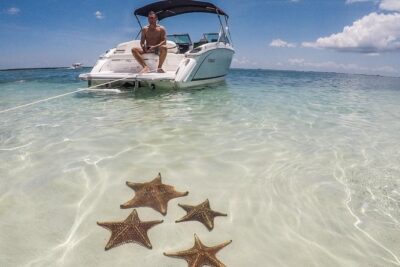
Private, luxury, custom charters to Stingray City, Snorkeling & More
Read our review →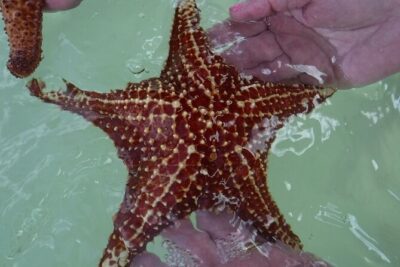
Private Half Day Stingray City, Snorkeling and Starfish Beach Tour
Read our review →
Private Charter 34ft Express Cruiser Stingay City Reef Snorkeling
Read our review →
Stingray City, Star fish Point and Snorkeling Private Boat Tour
Read our review →
Private Stingray City and Snorkeling Half Day Charter for 6 Guest
Read our review →
Private Boat Tours: Customize Your Grand Cayman Adventure!
Read our review →